Revolutionizing Patent Law: The Shift from AI-Based to AI-Native Solutions
The patent industry is undergoing a transformative shift from AI-based tools to AI-native platforms, fundamentally changing how legal professionals approach patent applications. This evolution not only impacts workflow efficiency but also has significant implications for patent quality and attorney involvement.
The patent industry is experiencing a fundamental transformation as it shifts from traditional AI-based tools to innovative AI-native platforms. This evolution is not just a minor upgrade; it marks a significant change in how patent applications are drafted, reviewed, and approved. As patent professionals grapple with increasing workloads and the complexities of intellectual property law, understanding these shifts is vital for practitioners looking to stay competitive and efficient.
In the past, many legal professionals relied on AI-based tools that were essentially traditional software programs with added AI features. While these tools provided some level of assistance, they often fell short in addressing the comprehensive needs of patent drafting. With the growing demands of the patent application process and the rising number of applications awaiting examination, a new class of AI-native platforms, such as Esgenix, is emerging to fill the gaps left by their predecessors. These platforms integrate AI into their core functionality, fundamentally changing how patent drafting is approached.

Understanding the Shift: AI-Based vs. AI-Native
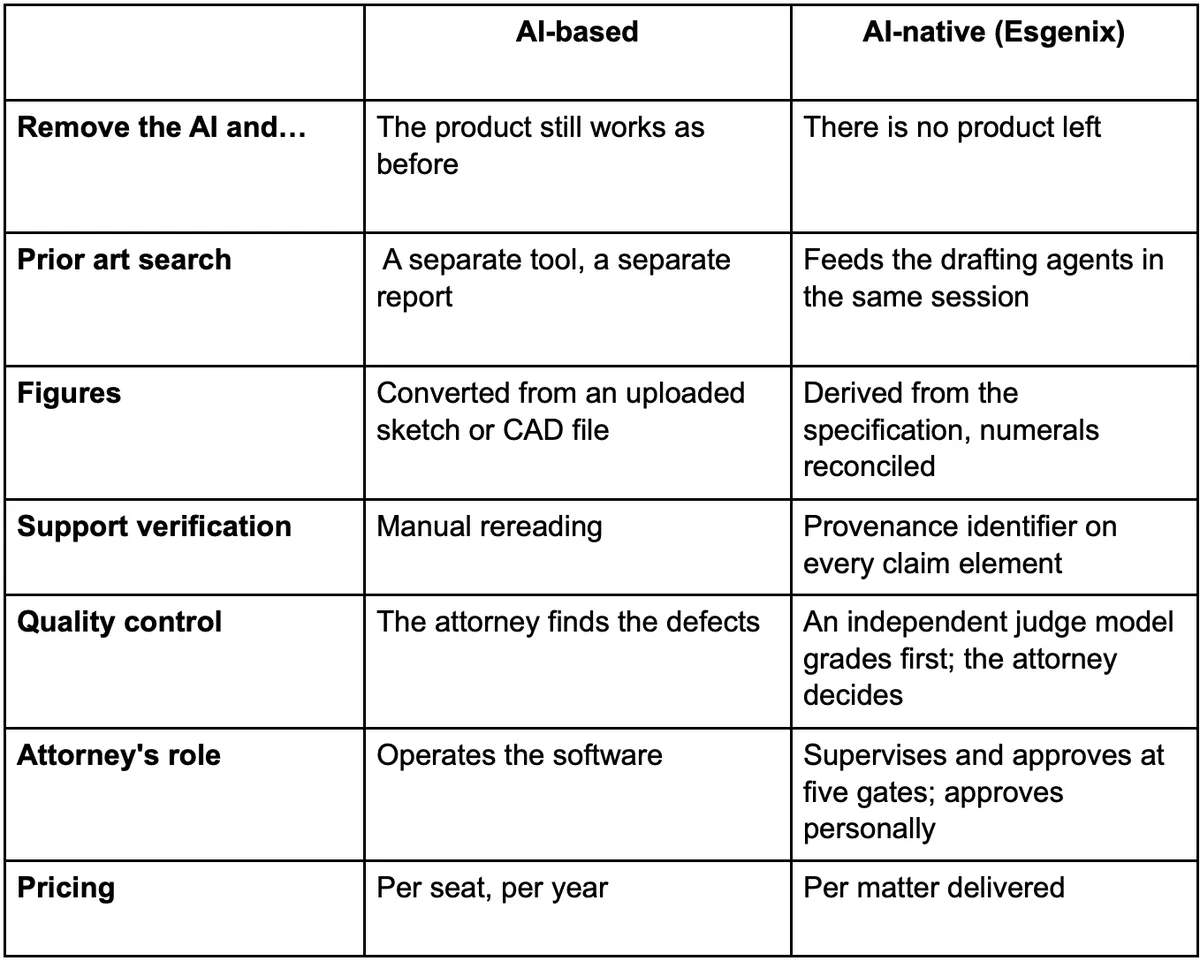
The distinction between AI-based and AI-native platforms is crucial for understanding the future of patent law. AI-based tools add artificial intelligence as a feature to existing software. This means that if the AI capabilities were stripped away, the software would still function, albeit in a more limited capacity. Conversely, AI-native platforms are built around AI capabilities from the ground up. Without AI, these platforms would not operate effectively. This fundamental difference determines what tasks can be outsourced and how effectively a patent application can be prepared.
Key Characteristics
- AI-Based Tools: Functions similarly to traditional software, with AI added as an enhancement.
- AI-Native Platforms: Entirely reliant on AI for their functionality, designed to leverage AI in every aspect of the workflow.
- Integration: AI-native platforms offer seamless integration of search and drafting processes, allowing for real-time adjustments and comprehensive analysis.
As the patent landscape evolves, the use of AI in intellectual property (IP) professions is skyrocketing. Research from Clarivate indicates that the adoption rate of AI tools in IP increased from 57% in 2023 to an anticipated 85% by 2025. This shift is not merely a trend but a necessary adaptation to the increasing complexity and volume of patent applications.

The Impact of AI on Patent Quality
With the United States Patent and Trademark Office (USPTO) facing a backlog of over 837,000 unexamined applications, the importance of high-quality patent applications has never been more critical. The introduction of AI-native platforms like Esgenix addresses this issue by enabling patent professionals to draft applications that are well-informed and strategically sound.
AI-Driven Workflows
AI-native platforms utilize a concept known as “agentic drafting.” Unlike traditional methods that rely on isolated prompts, an AI-native platform employs multiple AI agents that work collaboratively. These agents can perform various tasks, such as conducting relevant searches, creating application sections, and verifying the accuracy of the output. This collaborative approach mirrors the efforts of a well-coordinated team, significantly improving the quality and thoroughness of the patent application.
For instance, Esgenix conducts searches across over 220 million documents, analyzing the meaning of inventions rather than relying solely on keywords. This capability ensures that the drafting agents have access to pertinent prior art during the drafting process, allowing them to tailor the application to avoid redundancies and highlight innovative aspects of the invention.

Enhancing Attorney Involvement
The transition to AI-native platforms does not eliminate the attorney's role; rather, it refocuses their involvement on strategic decision-making and oversight. By structuring the workflow with defined gates, attorneys can maintain control over the application process while benefiting from enhanced efficiency. The gates allow attorneys to verify inventions, establish jurisdictions, and approve claims as they progress through the drafting stage.
Structured Review Points
In an AI-native workflow, the attorney's involvement is concentrated at key review points:
- Intake: Verification of the invention and addressing technical gaps.
- Strategy: Defining the breadth of claims and selecting fallback positions.
- Claims: Reviewing and approving the proposed claim set.
- Specification and Figures: Comprehensive review of drafts, ensuring accuracy and provenance of information.
- Final Approval: A human being provides the ultimate sign-off, ensuring accountability and adherence to legal standards.
This structured approach addresses the documented risks associated with unchecked AI use, allowing attorneys to fulfill their duty to conduct reasonable inquiries while benefiting from the efficiency that AI brings to the workflow.
The Financial Implications of AI-Native Solutions
As the patent industry adopts AI-native platforms, financial models are also evolving. Traditional AI-based tools are typically sold on a per-seat basis, which can lead to inefficiencies as costs are tied to headcount rather than actual output. In contrast, platforms like Esgenix offer pricing based on matters delivered, aligning costs more closely with the actual work completed and the value provided.
Budget Structuring
This shift in pricing not only makes budgeting more predictable for large corporate IP teams but also allows for more flexible resource allocation. By moving away from a headcount-based model, organizations can better manage their budgets based on their specific needs and the volume of patent applications they handle.
While some vendors may market themselves as alternatives to patent law firms, it is essential to recognize that AI-native platforms like Esgenix are designed to support attorneys rather than replace them. They facilitate the drafting process while ensuring that all critical decisions remain with the legal professionals involved.
Key Takeaways
- The patent industry is moving from AI-based to AI-native platforms, fundamentally changing patent drafting.
- AI-native platforms enhance the quality of patent applications through integrated workflows and collaborative agentic drafting.
- Attorneys play a central role in the patent process, focusing on strategy and review rather than manual drafting.
- Financial models are evolving to align costs with actual output, providing more predictable budgeting for IP teams.
- AI-native solutions are designed to support, not replace, attorneys in the patent application process.
Frequently Asked Questions
What are the main differences between AI-based and AI-native platforms?
AI-based platforms incorporate AI features into existing software, providing basic enhancements to traditional workflows. In contrast, AI-native platforms are built around AI technology, relying on it for their core functionality. This fundamental distinction influences how each platform operates and the extent to which tasks can be efficiently managed.
How does AI improve the patent application process?
AI enhances the patent application process by providing comprehensive search capabilities, streamlining drafting workflows, and ensuring that applications are well-informed and strategically constructed. By integrating AI into every aspect of the process, legal professionals can produce higher-quality patents while saving time and resources.
What role do attorneys play in AI-native workflows?
In AI-native workflows, attorneys maintain a crucial role by focusing on strategic decision-making and oversight. They are involved at various review points throughout the drafting process, ensuring that all critical decisions are made by qualified legal professionals while benefiting from the efficiencies provided by AI technology.
How do pricing models differ between AI-based and AI-native platforms?
AI-based platforms typically use a per-seat pricing model, which may not accurately reflect the actual output or value provided. In contrast, AI-native platforms often use a matter-delivery pricing model, aligning costs more closely with the work completed and allowing for more predictable budgeting for patent professionals.
This article is for informational purposes only and does not constitute legal advice.
Comments
Trump's Ban on Major News Outlets: A First Amendment Challenge Ahead
President Trump's recent announcement to ban CNN, MS NOW, and Politico from White House access raises significant First Amendment questions. This article explores the implications and potential legal battles stemming from this controversial decision.

Related articles




Popular in Business Law
- Supreme Court Justices' Financial Disclosures: A Closer Look
- Vishal Garg's Leadership Fallout: The Rise and Fall of Better.com
- Former Intelligence Official Faces Penalty for Post-Government Misconduct
- Blank Rome Faces Lawsuit After Major Data Breach Exposes Personal Information
- Congress Faces Reckoning Over Member-Staff Relationships