Uncovering the Grand Canyon's Billion-Year Mystery: New Geological Insights
Recent research reveals that an ancient escarpment could explain the Grand Canyon's missing geological history. This discovery sheds light on Earth's tectonic past and the evolution of landscapes.
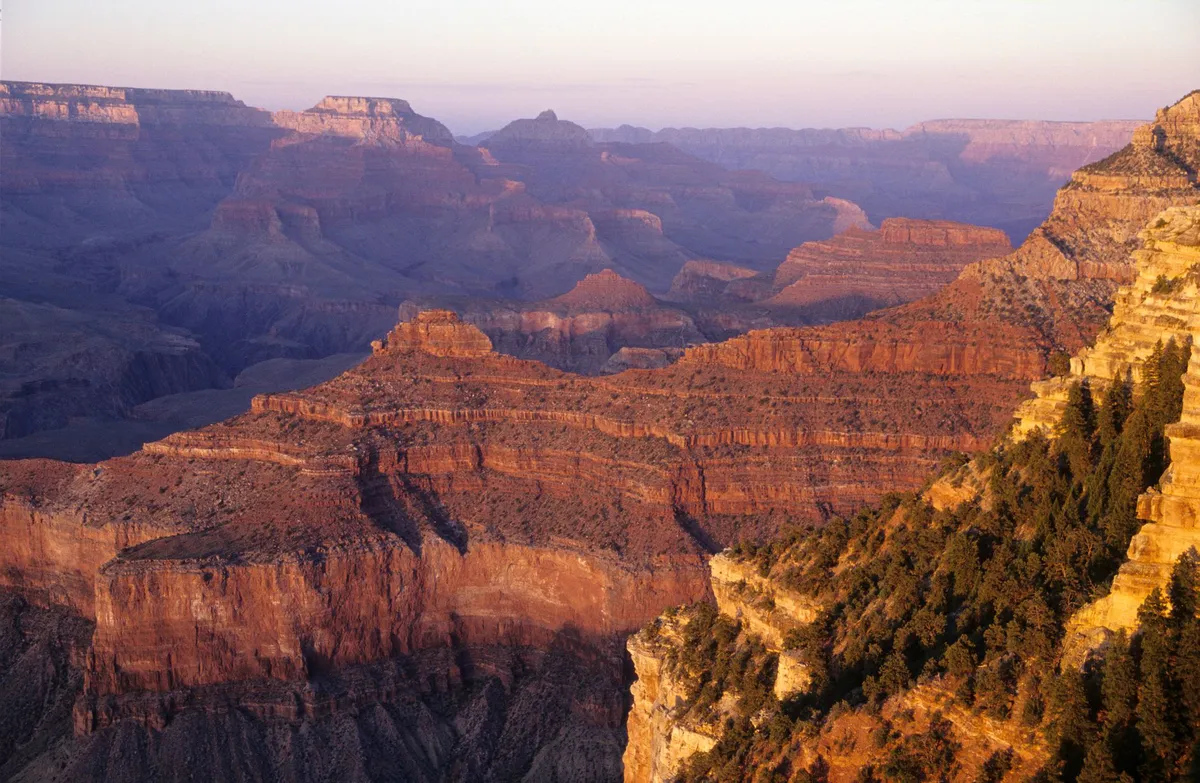
The Grand Canyon, one of the most iconic natural wonders on Earth, is not just a breathtaking vista but also a geological puzzle. Recent findings by researchers may finally illuminate why there is a striking gap of over a billion years in the canyon's geological record. Long before the Colorado River carved its way through this stunning landscape, a colossal wall of cliffs—an escarpment—may have played a crucial role in its transformation.
For millions of years, this ancient escarpment, towering approximately half a mile high and stretching thousands of miles across what is now North America, underwent erosion that ultimately stripped away vast amounts of rock. This process, which began after the breakup of the supercontinent Rodinia around 800 million years ago, left behind a substantial void in the geological record known as the "Great Unconformity." This gap is particularly evident in the Grand Canyon, where ancient crystalline rocks lie beneath much younger sedimentary layers, suggesting that more than a billion years of Earth's history is missing.
The Great Unconformity: What Is It?
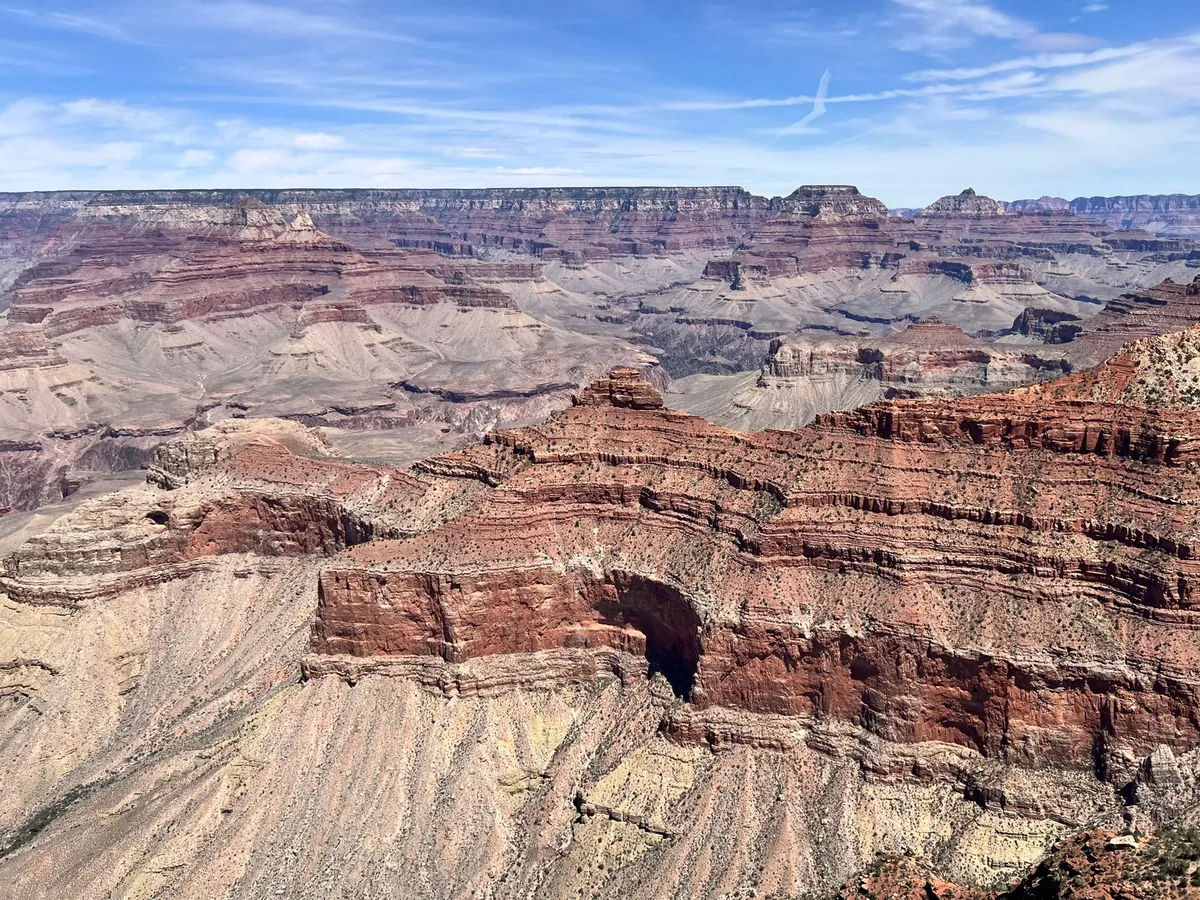
The term "Great Unconformity" describes a significant geological phenomenon where older rock layers are in contact with much younger layers, with little to no evidence of the intermediate period. In the Grand Canyon, this discontinuity is pronounced, leading to questions about past geological processes. According to Thomas Gernon, a professor of Earth science at the University of Southampton and lead author of the study published in the journal Geology, the canyon's geological history spans about 2 billion years, yet more than half of that record seems to be missing.
Gernon's team posits that the canyon's basement rocks were progressively exhumed as part of a vast escarpment formed during Rodinia's fragmentation. This theory provides a framework for understanding the dramatic erosion patterns seen in the southwestern United States, where the Great Unconformity varies in its manifestation.
Reconstructing Ancient Landscapes
The researchers employed a combination of plate tectonics reconstructions and data modeling to visualize what the landscape may have looked like during the breakup of Rodinia. Their findings suggest that this ancient escarpment would have traversed various parts of North America, including regions that are now Arizona, Utah, Idaho, Wyoming, Colorado, Texas, Oklahoma, Arkansas, Missouri, and Illinois.
Interestingly, the Grand Canyon's position relative to the edge of this ancient continent mirrors that of contemporary major escarpments found in South Africa and Brazil. Over tens of millions of years, the towering cliffs of this ancient landscape gradually retreated inland, with estimates indicating that as much as 5 miles of rock may have been eroded in some areas. This aligns with existing evidence that suggests 3 to 6 miles of rock were stripped away from the region well before the canyon assumed its current form.
The Effects of Tectonic Uplift
The breakup of Rodinia not only reshaped the landscape but also initiated tectonic uplift, leading to the formation of steep slopes and elevated terrains. These geological changes would have created ideal conditions for erosion by rivers and glaciers, further contributing to the canyon's current state.
The implications of this research extend beyond the Grand Canyon itself. The escarpment likely formed a mountainous rim around western Laurentia, the ancient core of North America. This uplifted region would have influenced river pathways, sediment accumulation, and the extent of rising seas that swept across the continent prior to the Cambrian explosion, a pivotal period when complex life began to diversify rapidly.
Insights for Modern Geology
The findings from this study not only clarify the geological history of the Grand Canyon but also provide a framework for understanding similar geological gaps in rock records worldwide. By studying modern escarpments in places like Africa, Brazil, India, and Antarctica, researchers can gain insights into the long-lasting effects of continental breakup on landscape evolution.
Gernon emphasizes that comparing the Grand Canyon's ancient geological history with active landscapes like the Great Escarpment of South Africa allows scientists to view North America's most renowned geological landmark in an entirely new light. This comparative approach can yield valuable lessons about the forces that shape continents over hundreds of millions of years, offering a deeper comprehension of the Earth's dynamic history.
Key Takeaways
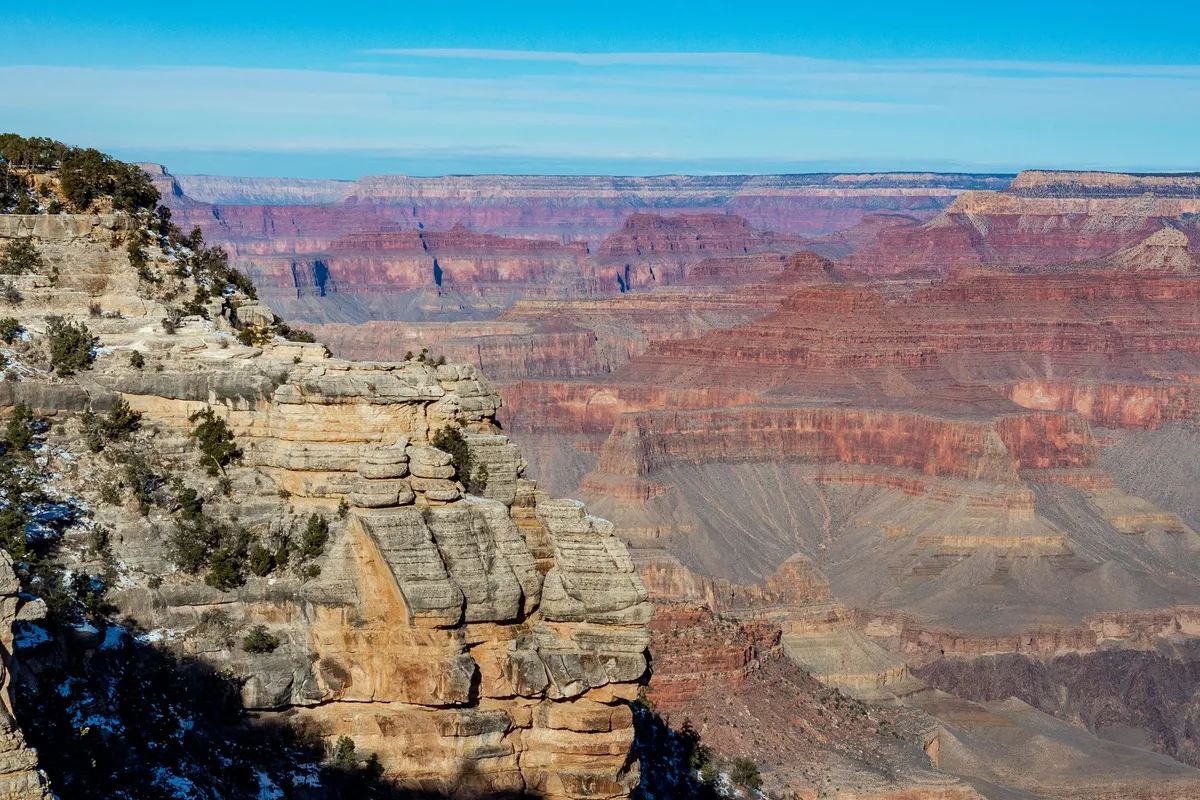
- The Grand Canyon's geological record has a billion-year gap attributed to erosion from an ancient escarpment.
- The Great Unconformity represents a significant geological phenomenon highlighting missing time in rock records.
- Research suggests tectonic uplift and erosion from the breakup of the supercontinent Rodinia played a key role in shaping the canyon.
- Studying modern escarpments worldwide helps geologists understand the long-term impacts of continental breakups.
Frequently Asked Questions
What is the Great Unconformity?
The Great Unconformity is a geological phenomenon characterized by a significant gap in the rock record, where older rock layers are found beneath much younger layers. This discontinuity indicates that a substantial amount of geological history is missing, posing questions about the processes that led to such erosion and the timeframes involved. In the Grand Canyon, this gap is particularly pronounced, with over a billion years of history seemingly absent.
How did the breakup of Rodinia affect the Grand Canyon?
The breakup of the supercontinent Rodinia around 800 million years ago initiated significant geological changes, including tectonic uplift that created steep slopes and high terrain. These changes facilitated erosion and the retreat of an ancient escarpment, which stripped away vast amounts of rock from the region. This erosion contributed to the Great Unconformity observed in the Grand Canyon, leading to the missing geological record.
Why is the study of modern escarpments important?
Studying modern escarpments is crucial for geologists as they offer insights into the long-term processes that shape landscapes over millions of years. By comparing ancient geological histories, like that of the Grand Canyon, with contemporary escarpments in regions such as Africa and Brazil, scientists can better understand how tectonic activities influence erosion, sediment deposition, and the overall evolution of landscapes. This knowledge is invaluable for piecing together Earth’s geological past and predicting future changes.
What implications do these findings have for future geological research?
The findings regarding the Grand Canyon's geological history and the ancient escarpment have broad implications for future geological research. They provide a framework for understanding similar gaps in rock records worldwide and can inform studies on the effects of continental breakup on landscape evolution. As researchers continue to explore these connections, they will likely uncover new insights into Earth’s tectonic history, improving our understanding of the geological processes that shape our planet.
Comments
Navigating Legal Support Services: Essential Tools for Case Management
Explore the vital role of legal support services, from process serving to court filing, in ensuring efficient case management and improved legal outcomes.

Related articles


Popular in Guides
- Lake Mead Reaches Historic Low: Understanding the Impacts of Water Scarcity
- Fires and Ferns: Understanding Ancient Europe's Climate Catastrophe
- Unveiling Hidden Stars: Astronomers Discover Four New White Dwarfs
- Understanding the Impact of Hawaii's Online Booking Fee Tax Ruling
- Navigating South Carolina Rental Property Law: A Comprehensive Guide