Whale Supergroups: A Conservation Success Story Facing New Threats
Humpback whale populations in the Southern Hemisphere are rebounding, creating extraordinary supergroups, but new threats from global conflicts jeopardize their future.
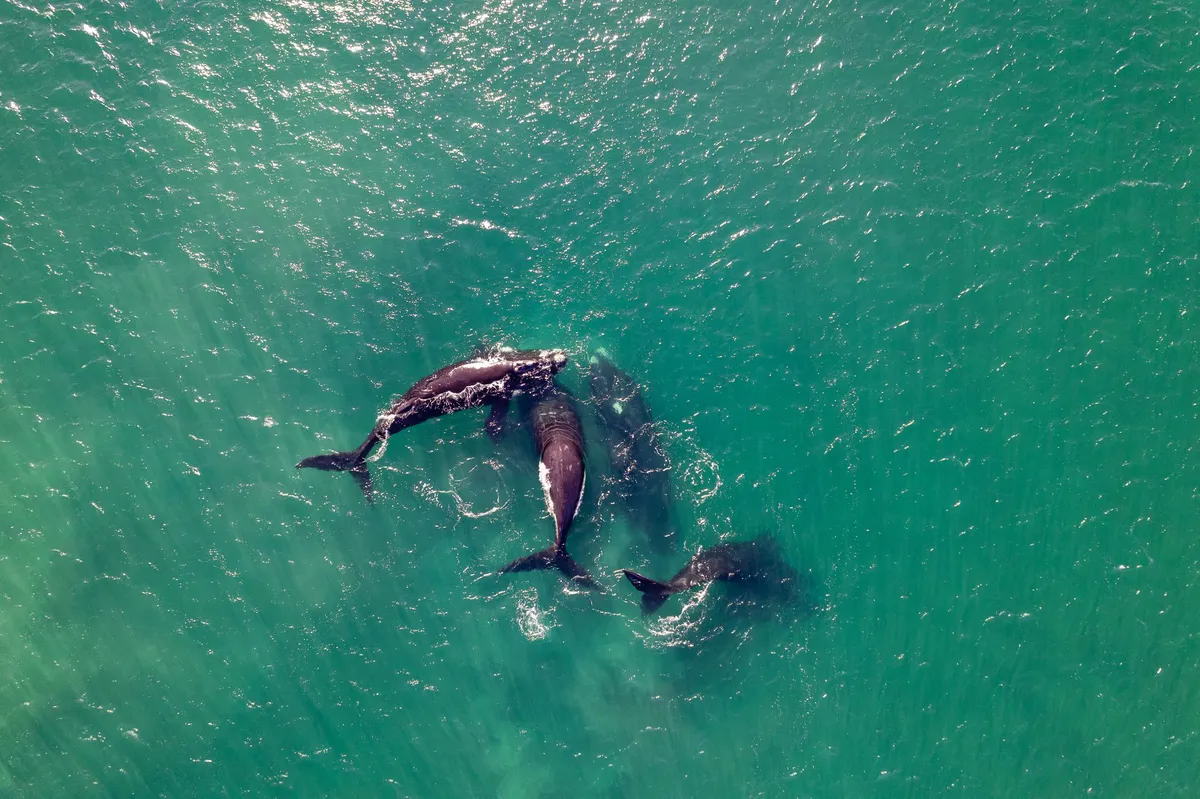
In a stunning display of nature's resilience, a South African couple recently witnessed a rare phenomenon off the coast of Cape Town, where nearly 300 humpback whales gathered together in what is known as a "supergroup." This extraordinary sighting not only highlights the remarkable recovery of humpback whale populations in the Southern Hemisphere but also raises urgent questions about the future of these majestic creatures amid rising global tensions and environmental challenges.
Chris and Monique Fallows, experienced wildlife enthusiasts, were unprepared for the spectacle they encountered last December. Surrounded by plumes of whale breath erupting from blowholes, they realized they were in the midst of an unprecedented congregation of humpback whales. Chris Fallows, a renowned wildlife photographer, described the experience as witnessing a "Manhattan skyline" of whale spouts, an overwhelming testament to both the beauty and splendor of marine life.
Recovery of Humpback Whale Populations
Decades after the international ban on whaling in 1986, scientists are now reporting a significant rebound in humpback whale numbers in southern oceans. Estimates suggest that the population has surged from fewer than 10,000 individuals at the height of commercial whaling to over 100,000 today. This recovery is largely attributed to the moratorium on hunting, which has allowed whale populations to replenish themselves in their natural habitats.
The Role of Citizen Scientists
The Fallows documented their sighting by photographing the unique tails, or flukes, of the humpbacks, a method commonly used by researchers to identify individual whales. Organizations like Happywhale have harnessed the power of citizen scientists—ordinary people who contribute to whale research by capturing and sharing images of these magnificent creatures. This data is crucial for tracking whale populations and understanding their behaviors.
- Population Growth: Humpback whales are estimated to have increased from less than 10,000 to over 100,000 since the whaling ban.
- Citizen Science: Initiatives like Happywhale utilize public contributions to build a comprehensive database for whale identification.
- Supergroups: Humpback whales typically travel alone or in small pods but sometimes form larger groups in areas rich in food.
The Significance of Supergroups
The emergence of supergroups is not just a spectacle; it underscores the ecological dynamics at play as humpbacks congregate in areas abundant with food such as krill and small fish. Els Vermeulen, chief scientist at the University of Pretoria’s Whale Unit, points out that these gatherings, which began to reappear around 2012, are indicative of the humpback whales' recovery from historical hunting pressures. Feeding in large groups also facilitates communication among whales, as they produce sounds that can attract others to the foraging areas.
Current Threats to Whale Populations
Despite the encouraging recovery of humpback whales, the World Wildlife Fund warns that many whale species still face significant threats. Out of 14 great whale species, seven are classified as endangered or vulnerable. Issues such as entanglement in commercial fishing gear, ship collisions, and the impacts of climate change continue to pose risks to these marine giants. The critically endangered North Atlantic right whale, with a population of only around 380, exemplifies the precarious state of some whale species.
Impact of Global Conflicts
In a troubling development, recent geopolitical tensions have added new layers of risk for whales in South African waters. Vermeulen and her colleagues have reported a quadrupling of shipping traffic around the southern tip of Africa since December 2023, largely due to the ongoing Israel-Hamas conflict and attacks by Yemen’s Houthi rebels on vessels in the Red Sea. As vessels are diverted from traditional shipping routes, the increased maritime traffic raises the likelihood of collisions between ships and whales.
Gregg Oelofse, Cape Town’s coastal and environmental manager, has noted that while many whale fatalities go unreported due to sinking, evidence of vessel strikes can be found in the form of carcasses washing ashore, often displaying clear signs of propeller injuries. This alarming trend calls for urgent measures to protect whale populations from the rising dangers posed by commercial shipping.
Advocacy for Whale Protection
In response to these challenges, scientists and environmental advocates are pushing for stricter regulations to safeguard whales. Speed limits for ships navigating near the South African coast are among the proposals being considered to reduce the risk of collisions. By implementing such measures, it is hoped that the chances of whales being struck by vessels can be minimized, ensuring their continued recovery and survival.
Key Takeaways
- Humpback whale populations have dramatically increased post-whaling ban, now exceeding 100,000.
- Citizen scientists play a vital role in documenting and tracking whale populations.
- Supergroups signify ecological recovery but face threats from increased shipping traffic and global conflicts.
- Seven out of 14 great whale species remain endangered or vulnerable.
Frequently Asked Questions
What are whale supergroups, and why are they significant?
Whale supergroups are large gatherings of whales, often seen in food-rich areas where they come together to feed. These gatherings are significant as they highlight the recovery of whale populations after decades of hunting. The re-emergence of supergroups suggests that whales are adapting to their environment, utilizing social behaviors to enhance feeding efficiency, and indicating a positive trend in their overall population health.
How has the international whaling ban impacted whale populations?
The international whaling ban enacted in 1986 has had a profound impact on whale populations, allowing them to recover from near extinction. The ban has resulted in a significant increase in the numbers of certain species, such as humpback whales, which have rebounded from fewer than 10,000 to over 100,000. This conservation success story underscores the importance of protective measures for wildlife and the positive outcomes that can result from international cooperation in environmental protection.
What are the main threats to whales today?
Today, whales face several significant threats, including entanglement in fishing gear, ship strikes, and the impacts of climate change. The increase in shipping traffic due to geopolitical tensions has further exacerbated these threats, making it crucial for conservationists and policymakers to implement protective measures to ensure the safety and survival of whale populations. Additionally, climate change poses long-term risks to marine ecosystems, affecting food availability and migration patterns.
What can be done to protect whales from ship strikes?
To protect whales from ship strikes, several measures can be implemented, including establishing speed limits for vessels in critical whale habitats, creating designated shipping lanes that avoid key feeding and breeding areas, and increasing awareness and education among mariners about the presence of whales. Additionally, the use of technology, such as monitoring systems and alerts for ships operating in whale-populated areas, can help reduce the likelihood of collisions, ultimately contributing to the conservation of these magnificent marine mammals.
This article is for informational purposes only and does not constitute legal advice.
Comments
Comic-Con 2026: Major Marvel Announcements with New Black Panther and Ghost Rider
At Comic-Con 2026, Marvel Studios made waves with the announcement of David Jonsson as the new Black Panther and Ryan Gosling's casting as Ghost Rider. These developments mark significant milestones in Marvel's cinematic journey.

Related articles
Popular in Guides
- Lake Mead Reaches Historic Low: Understanding the Impacts of Water Scarcity
- Fires and Ferns: Understanding Ancient Europe's Climate Catastrophe
- Unveiling Hidden Stars: Astronomers Discover Four New White Dwarfs
- Understanding the Impact of Hawaii's Online Booking Fee Tax Ruling
- Navigating South Carolina Rental Property Law: A Comprehensive Guide