Navigating Cross-Border Contractor Management: Legal Essentials
Managing and paying international contractors involves complex legal considerations. Understanding worker classification, tax obligations, and compliance can save businesses from costly disputes.
As businesses increasingly tap into global talent pools, managing and paying international contractors has become a common practice. However, while hiring contractors from across the globe can enhance operational efficiency and bring specialized skills to projects, it also introduces a myriad of legal complexities. Navigating these complexities is crucial for avoiding potential pitfalls, including hefty fines, back taxes, and unforeseen disputes. Understanding the legal landscape surrounding cross-border contractor management is not just advantageous; it’s essential for any business looking to thrive in an interconnected world.
The landscape of international contracting has evolved significantly, transitioning from cumbersome paperwork and slow bank transfers to streamlined, efficient digital solutions. Yet, with each cross-border payment comes a host of legal questions that businesses often overlook until problems arise. To protect your company and ensure smooth operations, it is vital to grasp the nuances of worker classification, local labor laws, tax requirements, and compliant payment methods.

Understanding Worker Classification: The Foundation of Legal Compliance
Worker classification is perhaps the most critical legal question when hiring international contractors. Misclassifying a worker can lead to significant financial repercussions, including back wages, unpaid taxes, and even penalties for failing to provide benefits. It is important to remember that simply labeling someone as a contractor does not make it so in the eyes of tax authorities or labor courts. Classification is determined by the nature of the working relationship, not the job title.
Different Standards Across Borders
Countries employ various tests for classification, and these can differ widely. In the U.S., for instance, federal wage and hour laws apply a multi-factor economic reality test, while some states have adopted a stricter “ABC” test that presumes a worker is an employee unless proven otherwise. The United Kingdom utilizes the IR35 framework to assess contractor arrangements. These tests focus on the actual relationship between the worker and the hiring entity, disregarding any contractual language that may suggest otherwise.
The Importance of Local Labor Laws
A common misconception among U.S.-based businesses is that their home country’s laws automatically govern all contractor relationships. However, the contractor's location is equally significant, if not more so. Many countries enforce mandatory local labor protections that must be adhered to regardless of what the contract stipulates. These protections can include minimum wage requirements, social security contributions, and specific registration for self-employed workers.
Permanent Establishment Risks
Another legal risk for businesses engaging contractors abroad is the concept of permanent establishment. If a company operates in a foreign country for an extended period, it may be viewed as having a business presence there, thus incurring local corporate tax obligations. To mitigate this risk, it’s crucial to understand the local regulations before onboarding contractors in new jurisdictions. Properly assessing the business's activities in the foreign country can prevent unexpected tax liabilities.

Navigating Tax Documents and Reporting Requirements
When it comes to cross-border payments, tax documentation is vital. For U.S.-based companies, the source of income is determined by where the work is performed, not the contractor’s residence or the location of the bank account. This distinction is crucial because misclassifying income can lead to penalties for under-withholding taxes.
Essential Tax Forms
For most U.S. businesses paying non-U.S. contractors whose work occurs entirely outside the United States, income is classified as foreign-source and is generally not subject to U.S. withholding taxes. However, to document this status, businesses must obtain the appropriate W-8 form from the contractor before making any payments. This form certifies the contractor's foreign status. Maintaining signed copies is advisable, as they remain valid for three years unless the contractor's circumstances change.
It’s also important to note that even though contractors are generally responsible for their own income taxes, some jurisdictions require the hiring business to report payments or file local documentation. This can vary significantly from country to country, underscoring the need for businesses to verify specific tax obligations for each contractor.

Crafting Comprehensive Cross-Border Contracts
A well-drafted contract is essential in cross-border relations. Unlike domestic agreements, contracts involving international contractors need to be robust enough to hold up in multiple legal systems. It’s essential to work with legal professionals who understand the specific laws and requirements of the contractor’s location, particularly for longer or higher-value engagements.
The Risks of Vague Agreements
A vague or poorly defined contract can lead to disputes that are difficult to resolve. A comprehensive agreement should clearly outline the terms of the working relationship, payment structures, and dispute resolution mechanisms. Enforceability in the contractor’s jurisdiction is also a critical consideration, as an agreement that is valid at home might not carry the same weight overseas.
Choosing the Right Payment Method
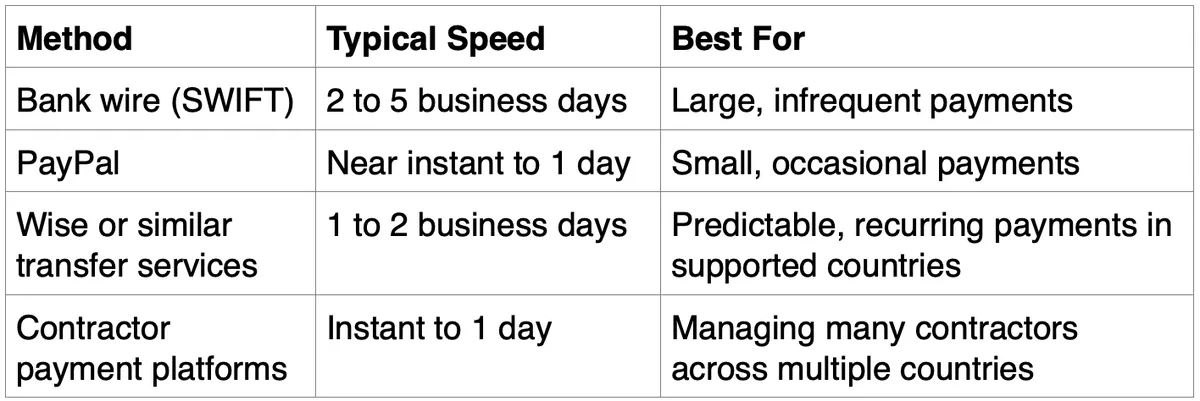
Once classification and paperwork are settled, businesses face the challenge of selecting a compliant payment method. The right payment solution must balance cost, speed, and legal compliance. For companies working with a small number of contractors, traditional bank transfers or payment services may suffice. However, as the contractor base expands, managing payments manually can become burdensome.
Leveraging Contractor Management Platforms
Dedicated contractor management platforms offer a streamlined solution for international payments. Services like Mellow facilitate onboarding, contract documentation, currency conversion, and payouts from a single dashboard. This not only reduces administrative burdens but also minimizes the risk of compliance issues arising from manual processing errors.

Avoiding Common Compliance Mistakes
As businesses scale their international contractor teams, certain compliance mistakes frequently arise. One of the most critical errors is neglecting to perform identity and sanctions screening on contractors. Before initiating payments, it is essential to verify that a contractor is not listed on any restricted party lists, such as the Specially Designated Nationals list maintained by the U.S. Treasury Department. Failing to conduct these checks can lead to severe legal consequences.
Transitioning from Contractor to Employer of Record
Over time, a contractor relationship can evolve to resemble employment, particularly if the contractor works exclusively with your business or becomes heavily integrated into daily operations. When this occurs, companies must decide whether to establish a local legal entity or engage an Employer of Record (EOR). An EOR acts as the legal employer of the contractor while allowing your business to direct day-to-day operations. This approach is typically more efficient and cost-effective for testing new markets or hiring small teams.
Key Takeaways
- Worker Classification Matters: Proper classification of contractors is essential to avoid penalties and legal disputes.
- Local Laws Are Crucial: Always check the local labor laws that may apply to your contractors.
- Tax Documentation Is Key: Ensure you collect the correct tax forms to avoid withholding penalties.
- Robust Contracts Are Essential: Draft comprehensive contracts that can be enforced across jurisdictions.
- Use Technology Wisely: Consider contractor management platforms for efficient payment processes.
Frequently Asked Questions
Do I need a written contract for every international contractor, even for short projects?
Yes. A written agreement is essential for protecting both parties and providing documentation that the relationship is a legitimate business-to-business arrangement. This is especially important if the contractor's classification is ever questioned, as it helps establish the nature of the working relationship.
Can I pay international contractors in cryptocurrency?
While some businesses are adopting cryptocurrency for payments, it introduces complexities regarding tax reporting and legal protections in case of payment disputes. Established contractor payment platforms and tax advisors typically recommend using traditional currency payments unless there is a compelling reason to utilize cryptocurrency.
What happens if I misclassify a contractor without realizing it?
Misclassification can lead to significant financial liabilities, including back pay, unpaid taxes, and penalties. Depending on the jurisdiction, you could also face retroactive benefits claims. Regularly reviewing the nature of the working relationship, rather than solely relying on the contract language, is the best way to prevent issues of misclassification from arising.
Is a foreign contractor responsible for their own taxes?
Generally, yes. However, the hiring business may still have reporting obligations, such as collecting the correct tax forms before issuing payments. Tax requirements can vary widely by country, so it’s crucial to verify each contractor’s specific obligations to avoid compliance issues.
This article is for informational purposes only and does not constitute legal advice.
Comments
Rethinking Email Privacy: A Critical Need for Businesses Today
As businesses increasingly rely on email for sensitive communications, the importance of choosing a privacy-focused email provider cannot be overstated. This article explores the implications of email privacy and offers guidance on safeguarding sensitive information.

Related articles





Popular in Business Law
- Supreme Court Justices' Financial Disclosures: A Closer Look
- Vishal Garg's Leadership Fallout: The Rise and Fall of Better.com
- Former Intelligence Official Faces Penalty for Post-Government Misconduct
- Blank Rome Faces Lawsuit After Major Data Breach Exposes Personal Information
- Congress Faces Reckoning Over Member-Staff Relationships