Exploring the Lasting Impact of the Declaration of Independence on Global Law
At the recent ABA Annual Conference, justices examined the Declaration of Independence's international legal roots and its enduring influence. This article delves into the historical significance and contemporary relevance of this foundational document.
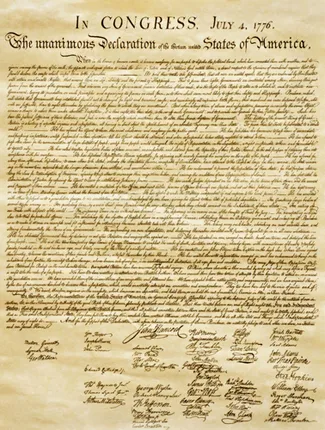
This year’s American Bar Association (ABA) Annual Conference gathered some of the brightest legal minds to discuss a topic that resonates deeply within the fabric of American democracy: the Declaration of Independence. As the nation celebrates its historical roots, the justices at the conference took a closer look at how this seminal document has not only shaped American law but also affected international legal frameworks. The discussions highlighted the Declaration’s enduring legacy and its role in inspiring movements for freedom and justice around the globe.
The Declaration of Independence, adopted on July 4, 1776, stands as a powerful statement of human rights and self-governance. At its core, it articulates the philosophical underpinnings that justify the colonies’ break from British rule, asserting that all men are created equal and endowed with unalienable rights. But its influence extends far beyond the borders of the United States, sparking legal and political revolutions worldwide.
Historical Context of the Declaration
To fully appreciate the Declaration of Independence's impact, it is essential to understand its historical context. Drafted during a time of colonial unrest, the Declaration was not merely a document of separation; it was a manifesto of enlightenment ideals that championed individual liberty and democratic governance. Influenced by the works of philosophers like John Locke and Montesquieu, the authors, primarily Thomas Jefferson, sought to articulate a vision of a society built on principles of equality and justice.
The Enlightenment Influence
The Enlightenment period laid the foundation for many modern democratic principles. The Declaration reflects these ideals, emphasizing the importance of consent and the social contract. By proclaiming the right of the people to alter or abolish a government that becomes destructive to their rights, the Declaration empowered future generations to challenge oppressive regimes.
The Global Ripple Effect
As the justices discussed, the Declaration of Independence has inspired numerous independence movements and legal frameworks worldwide. Its principles have been echoed in various international declarations and constitutions, including the French Declaration of the Rights of Man and of the Citizen and the United Nations Universal Declaration of Human Rights.
- French Revolution: The Declaration's assertion of individual rights inspired the French Revolution, leading to a rethinking of governance in Europe.
- Latin American Independence: Leaders like Simón Bolívar cited the Declaration in their struggles for freedom from colonial powers.
- African Nationalism: The principles of the Declaration have informed movements in Africa, advocating for independence and democratic governance.
Contemporary Relevance
In today’s global landscape, the ideals of the Declaration continue to resonate. As justices pointed out, international human rights law increasingly reflects the principles embedded in the Declaration. Documents like the International Covenant on Civil and Political Rights draw directly from the Declaration's ethos, emphasizing the protection of individual freedoms.
Challenges to the Legacy
However, the ongoing application of these ideals faces significant challenges. In many parts of the world, the promise of liberty and justice remains unfulfilled. Authoritarian regimes often suppress dissent and violate human rights, despite the frameworks established by international law. The disparity between the ideals of the Declaration and the realities faced by many underscores the need for continued advocacy and reform.
Engaging with the Legacy
So, what can individuals and communities do to engage with the legacy of the Declaration of Independence? The justices at the conference emphasized the importance of education, advocacy, and active participation in democratic processes. Understanding the history and principles behind the Declaration equips citizens to uphold its ideals in contemporary society.
Legal professionals have a crucial role to play in this endeavor. By promoting legal literacy and fostering discussions about human rights, lawyers can help bridge the gap between the ideals of the Declaration and the lived experiences of individuals. Engaging with local communities, supporting human rights initiatives, and participating in public discourse are vital steps in honoring the Declaration's legacy.

Key Takeaways
- The Declaration of Independence is a foundational document that articulates rights and self-governance.
- Its influence extends globally, inspiring numerous movements for freedom and justice.
- Education and advocacy are essential for continuing the legacy of the Declaration in modern society.
- Legal professionals play a vital role in promoting the principles outlined in the Declaration.
Frequently Asked Questions
What is the significance of the Declaration of Independence in modern law?
The Declaration of Independence remains a critical document in modern law as it outlines fundamental human rights and the principles of governance. It serves as an inspirational blueprint for various democratic movements and is frequently cited in discussions about civil liberties and human rights.
How has the Declaration influenced international law?
The Declaration has significantly influenced international law by providing a framework for human rights that many countries have adopted in their constitutions and legal systems. Its emphasis on equality and justice is mirrored in numerous international treaties and agreements, fostering a global commitment to uphold human rights.
What role do legal professionals play in honoring the Declaration's legacy?
Legal professionals are pivotal in honoring the Declaration’s legacy by advocating for human rights, educating the public about their rights, and challenging injustices in the legal system. By engaging with local communities and supporting initiatives that reflect the Declaration's principles, lawyers can help ensure that the ideals expressed in the Declaration remain relevant and actionable.
How can individuals advocate for the principles of the Declaration?
Individuals can advocate for the principles of the Declaration by educating themselves and others about their rights, participating in civic engagement, and supporting organizations that promote democracy and human rights. Active participation in the political process, from voting to advocacy, is essential for upholding the values enshrined in the Declaration of Independence.
Disclaimer: The content is general information, not legal advice.
Comments
New York Takes Legal Action Against Kalshi for Alleged Illegal Gambling
New York state has initiated a lawsuit against Kalshi, claiming the online prediction market is operating illegally by allowing users under 21 to participate, violating state gambling laws. The lawsuit seeks $36 billion in penalties and restitution for New Yorkers.

Related articles





Popular in Business Law
- Supreme Court Justices' Financial Disclosures: A Closer Look
- Vishal Garg's Leadership Fallout: The Rise and Fall of Better.com
- Former Intelligence Official Faces Penalty for Post-Government Misconduct
- Blank Rome Faces Lawsuit After Major Data Breach Exposes Personal Information
- Congress Faces Reckoning Over Member-Staff Relationships