Wisconsin Supreme Court Opens Door to Congressional Map Challenges
The Wisconsin Supreme Court is contemplating challenges to the state's congressional maps amid claims of partisan gerrymandering. This potential shift could have significant implications for future elections and the balance of power in the state.

In a significant session this week, the Wisconsin Supreme Court hinted at a willingness to hear challenges regarding the state's contentious congressional maps. These maps, drawn by Republican lawmakers, have been criticized for favoring the GOP in a state where election results are nearly evenly split between Democrats and Republicans. The court's discussions reflect a broader national conversation about gerrymandering—where district boundaries are manipulated to benefit one political party over another—and its implications for democracy.
The existing congressional map has yielded a disproportionate representation in Congress, with six Republican representatives and only two Democrats, raising questions about fairness and representation. As various groups mobilize to contest these maps, the stakes are high not just for the immediate electoral landscape but for the very nature of political representation in Wisconsin.
The Context of Wisconsin's Congressional Maps
The current congressional maps were established following a contentious deadlock between the Republican-controlled legislature and Governor Tony Evers, a Democrat. After extensive legal battles, the Wisconsin Supreme Court, then under a conservative majority, adopted a “least change” doctrine that preserved the existing boundaries with minimal modifications. This approach, however, has since faced scrutiny, particularly after the liberal justices gained the majority in 2023.
Chief Justice Jill Karofsky has been vocal about the legitimacy of the maps, questioning the integrity of a system that allows the very lawmakers who benefited from these boundaries to dictate their structure. She pointedly noted that many citizens believe their votes have been diluted and that the maps were fundamentally unfair, if not outright rigged.
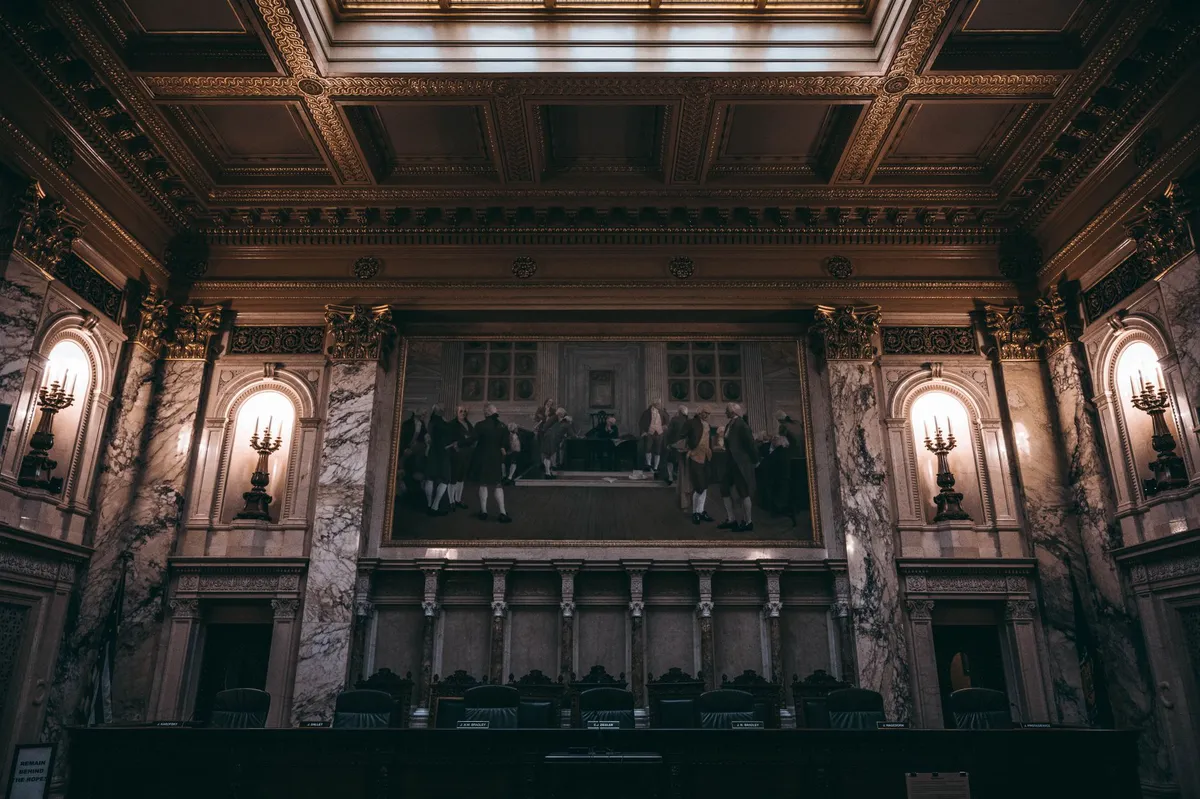
Gerrymandering: A National Issue
Wisconsin is not alone in grappling with the issue of partisan gerrymandering. The U.S. Supreme Court ruled in 2019 that claims of partisan gerrymandering are non-justiciable political questions, effectively leaving states to navigate these challenges independently. This ruling has led to increased scrutiny of state-level judicial systems, where the definition of fairness in redistricting remains elusive.
Justice Susan Crawford expressed concern that the repeated challenges and the courts' struggles to address them indicate a systemic problem affecting the political landscape. This ongoing debate raises critical questions about the balance of power, accountability, and the role of the judiciary in ensuring fair electoral practices.
Legal Arguments and Perspectives
The legal arguments presented during the court's recent session reveal the complexity of the issues at hand. Abha Khanna, representing voters challenging the maps, argued that applying a “least change” standard to fundamentally skewed boundaries undermines the principle of equal treatment under the law. She contended that voters should not be subject to arbitrary disadvantages based on their political affiliations or geographic locations.
However, Justice Brian Hagedorn, one of the conservative voices on the bench, challenged Khanna’s assertion, suggesting that her demands could lead to the court overstepping its boundaries by creating new rights. The tension between judicial intervention and legislative authority was palpable, as the justices debated the extent of their role in addressing perceived injustices in the electoral process.

Impact on Future Elections
While the current challenges may not alter Wisconsin's congressional maps ahead of the upcoming midterm elections, their outcomes could significantly influence the political landscape for the 2028 elections. The court's decision to allow or deny challenges could set precedents that affect future redistricting efforts, potentially reshaping the state's political dynamics.
Additionally, the competing lawsuit from Wisconsin Business Leaders for Democracy, which alleges that the congressional map is an “anti-competitive gerrymander,” underscores the growing recognition of the detrimental effects that gerrymandering can have on democracy. The group's arguments intersect with broader concerns about the health of democratic processes and fair representation.
What’s at Stake?
The implications of these legal battles extend far beyond Wisconsin. As states across the country confront similar issues, the outcomes of these cases could inform national discussions about electoral fairness and the integrity of democratic institutions. The questions raised during this week’s court session are emblematic of a larger struggle for political equity:
- Representation: Ensuring that electoral maps reflect the will of the people rather than the interests of a political party.
- Judicial Oversight: Determining the appropriate role of courts in rectifying legislative overreach or bias.
- Voter Engagement: Encouraging citizens to participate in the democratic process, armed with the knowledge that their votes can lead to meaningful change.

Key Takeaways
- The Wisconsin Supreme Court is considering challenges to congressional maps that may favor Republicans.
- Gerrymandering remains a contentious issue affecting representation across the United States.
- The outcomes of these legal battles could influence future electoral maps and the balance of power in Wisconsin.
- Public engagement is crucial in advocating for fair representation and electoral integrity.
Frequently Asked Questions
What is gerrymandering, and why is it controversial?
Gerrymandering refers to the practice of drawing electoral district boundaries in a way that gives one political party an advantage over others. This is controversial because it can distort the electoral process, leading to unrepresentative outcomes where the distribution of voters does not reflect their actual preferences. Critics argue that it undermines the principle of fair representation and can entrench political power for those in control of the redistricting process.
How does the Wisconsin Supreme Court's decision impact future elections?
The decisions made by the Wisconsin Supreme Court regarding the congressional maps could set important precedents for how electoral boundaries are drawn in the future. If the court allows challenges to proceed and ultimately decides to redraw the maps, it could affect the political landscape of Wisconsin, potentially leading to more competitive elections and a more representative Congress. Conversely, if the court upholds the current maps, it may signal a reluctance to intervene in partisan gerrymandering cases, influencing similar disputes nationwide.
What can citizens do to advocate for fair electoral maps?
Citizens can engage in advocacy by participating in grassroots movements, supporting organizations focused on electoral reform, and raising awareness about the importance of fair representation. Attending public meetings, contacting elected officials, and participating in local discussions about redistricting can also empower individuals to influence the political process. By voicing their concerns and pushing for transparency in how district lines are drawn, citizens can contribute to a more equitable electoral system.
What are the potential outcomes of the current legal challenges in Wisconsin?
The current legal challenges in Wisconsin could lead to a variety of outcomes, ranging from the court upholding the existing maps to ordering a complete redrawing of congressional boundaries. The court might also establish new standards for evaluating gerrymandering claims, which could influence how future cases are handled. Regardless of the outcome, these challenges highlight the ongoing debate about the integrity of the electoral process and the need for accountability in how political power is distributed.
This article is for informational purposes only and does not constitute legal advice.
Comments
Shari S. Laskowitz Takes the Helm as Co-Chair of Tarter Krinsky & Drogin’s Landlord & Tenant Practice
Shari S. Laskowitz has been appointed as Co-Chair of Tarter Krinsky & Drogin’s Landlord & Tenant Practice. With over 25 years of experience, she aims to expand the firm's real estate dispute capabilities and mentor the next generation of attorneys.

Related articles






Popular in Business Law
- Supreme Court Justices' Financial Disclosures: A Closer Look
- Vishal Garg's Leadership Fallout: The Rise and Fall of Better.com
- Former Intelligence Official Faces Penalty for Post-Government Misconduct
- Blank Rome Faces Lawsuit After Major Data Breach Exposes Personal Information
- Congress Faces Reckoning Over Member-Staff Relationships