Black Holes: Surprising Insights into Cosmic Feeding Habits
Recent research reveals that black holes may expel as much matter as they consume, challenging previous understandings of these cosmic giants. This study sheds light on the complexities of black hole behavior and their impact on surrounding celestial bodies.
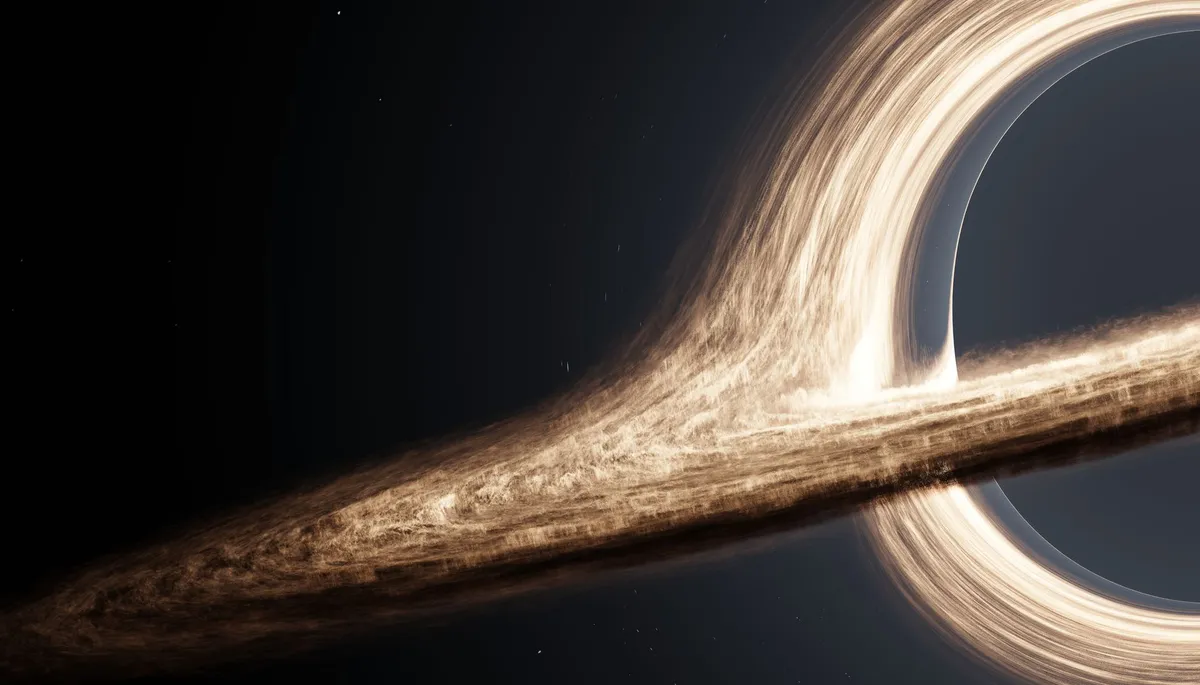
Black holes have long captivated the imagination of astronomers and the public alike. These colossal entities, often depicted as voracious cosmic vacuum cleaners, are known for their formidable ability to consume matter on a grand scale. However, recent research from the University of Warwick challenges this simplified view, revealing that the behavior of black holes is far more complex than previously thought. The study, published in the Monthly Notices of the Royal Astronomical Society, suggests that black holes can be not only insatiable eaters but also surprisingly messy eaters.
Led by astronomer Noel Castro Segura, the research team focused their observations on the black hole system Swift J1727.8−1613, which gained attention in 2023 after emitting an extraordinary outburst of light and matter. Utilizing the European Southern Observatory's Very Large Telescope in northern Chile, the team was able to analyze this dramatic phenomenon, which lasted an impressive 10 months. During this time, Swift J1727.8−1613 was seen to actively consume gas from a nearby star, yet it also expelled a significant amount of matter back into space, potentially rivaling what it had consumed.
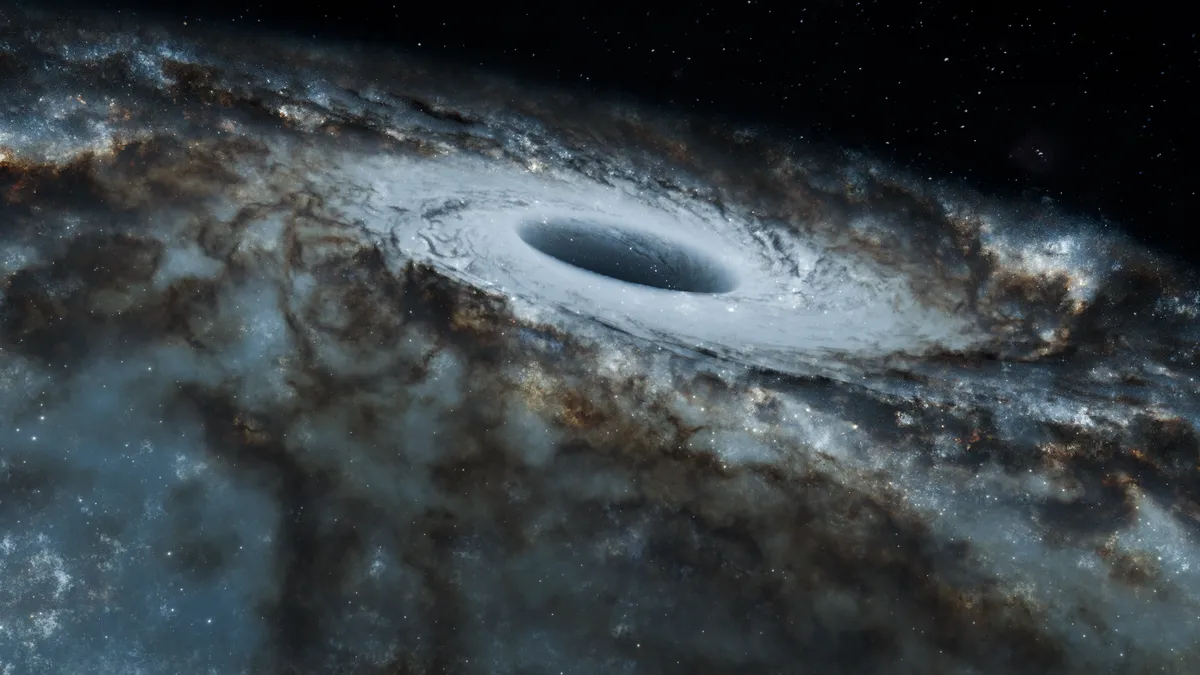
Understanding Black Hole Behavior
The study's findings illuminate a fascinating aspect of black hole dynamics. Traditionally, black holes have been imagined as entities that simply absorb everything in their vicinity. However, Segura's research underscores a more nuanced process: black holes not only ingest matter but also process it in a way that results in the ejection of substantial amounts of material. This phenomenon is particularly evident in what astronomers refer to as “faint” or lower-activity black holes.
The Ejection Process
During the 10-month outburst observed in Swift J1727.8−1613, the black hole consumed gas from a companion star, but it also expelled a significant portion of that material back into the cosmos. This ejection takes the form of powerful jets and winds that can greatly influence the surrounding interstellar environment. As Segura noted, “People often imagine black holes simply swallowing everything around them. What we're seeing is a much more complex process.”
The Implications for Cosmic Evolution
The implications of these findings extend beyond mere curiosity. If black holes are expelling as much matter as they consume, it raises critical questions about how binary star systems evolve within galaxies. Traditionally, the efficiency of black holes as matter absorbers has been a key factor in models of galactic evolution. However, if a significant fraction of the material is ejected, it suggests that our understanding of these processes may need a substantial revision.
Changing Perceptions
One of the most surprising revelations from this research is that black holes may not be as efficient in their feeding habits as previously assumed. Even after their most dramatic outbursts, black holes can continue to emit gas at a reduced rate—about 1% of their peak activity. This suggests that the material that does not get consumed could play a crucial role in the dynamics of the surrounding galactic environment, including the formation of new stars and the recycling of cosmic materials.
The Humor in Cosmic Discoveries
Amid the profound implications of this research, there is an element of humor that resonates with both scientists and the general public. The idea that black holes can “pass gas” adds a lighthearted twist to a topic that is often shrouded in complexity. Science journalists and educators will likely find this detail a charming addition to their discussions about black holes, making the subject more approachable for younger audiences and the curious public.
Future Research Directions
As scientists continue to investigate the intricate behaviors of black holes, future research will likely focus on refining our understanding of their feeding mechanisms and the subsequent impact on their surroundings. The findings from the Swift J1727.8−1613 study are just the beginning, opening the door for new questions about the lifecycle of stars, black holes, and the evolution of galaxies.
Potential Research Questions
- How do different types of black holes vary in their feeding and ejection processes?
- What role does the expelled material play in star formation and galactic dynamics?
- Can we observe similar behaviors in other black holes across the universe?
Key Takeaways
- Black holes may expel as much matter as they consume, challenging traditional views.
- The study of Swift J1727.8−1613 reveals complex feeding and ejection processes.
- Findings could significantly alter our understanding of binary star evolution and galactic dynamics.
- The humorous aspects of black hole research make it more accessible to the public.
- Future studies will focus on the implications of black hole behavior on cosmic evolution.
Frequently Asked Questions
What is a black hole?
A black hole is a region in space where the gravitational pull is so strong that nothing, not even light, can escape from it. They are formed when massive stars undergo gravitational collapse at the end of their life cycle, resulting in a point of infinite density known as a singularity.
How do black holes consume matter?
Black holes consume matter through a process known as accretion. When an object, such as a star or gas cloud, comes too close to a black hole, it can be pulled in by its intense gravitational field. As the material spirals into the black hole, it heats up and emits radiation, which can be observed as X-rays or other forms of energy.
What does it mean for black holes to eject matter?
The ejection of matter from black holes typically occurs in the form of high-energy jets or winds. This process can influence the surrounding environment, impacting star formation and the distribution of materials in galaxies. It indicates that black holes may play a more active role in their ecosystems than previously understood.
Why is this research important?
This research is significant because it challenges established theories about black hole behavior and their efficiency in consuming matter. By understanding the complexities of black hole feeding and ejection processes, scientists can gain insights into the evolution of galaxies and the lifecycle of stars, which are fundamental to our understanding of the universe.
This content is general information, not legal advice.
Comments
Judge Questions Pentagon's Labeling of Anthropic as Supply Chain Risk
A federal judge is poised to block the Pentagon from designating AI firm Anthropic as a 'supply chain risk'. This case raises significant First Amendment issues and questions of trust in government contracts.

Related articles






Popular in Business Law
- Supreme Court Justices' Financial Disclosures: A Closer Look
- Vishal Garg's Leadership Fallout: The Rise and Fall of Better.com
- Former Intelligence Official Faces Penalty for Post-Government Misconduct
- Blank Rome Faces Lawsuit After Major Data Breach Exposes Personal Information
- Congress Faces Reckoning Over Member-Staff Relationships