The Battle Over Supreme Court Composition: A Constitutional Showdown
The recent failed effort to amend the U.S. Constitution and cap Supreme Court justices at nine underscores the growing partisan tensions surrounding the judiciary. As Republicans and Democrats clash over court-packing claims, the implications for the future of the Supreme Court and American democracy are profound.
The concept of judicial independence has long been a cornerstone of American democracy, yet recent political maneuvers reveal the fragility of this principle in the current climate. On Wednesday, the House of Representatives dealt a significant blow to Republican efforts aimed at amending the U.S. Constitution to limit the Supreme Court to nine justices. This failed proposal, while unlikely to gain traction, highlights the deepening partisan divide over the judiciary and raises questions about the integrity and independence of the Supreme Court.
Led by Arizona Representative Andy Biggs, the GOP’s push to formally codify the number of justices at nine was framed as a necessary measure to counter alleged Democratic plans for "court-packing"—the controversial concept of increasing the number of justices to tilt the court’s ideological balance. With the midterm elections looming, Republicans have ramped up their rhetoric against Democrats, accusing them of orchestrating a systematic assault on the court’s independence.
The Context of Court-Packing Accusations
The term "court-packing" refers to the strategy of expanding the Supreme Court to allow a sitting president to appoint additional justices, thus potentially shifting the ideological balance of the court. Republicans, including House Judiciary Committee Chair Jim Jordan, have pointed to proposals from some Democrats that advocate for adding four new seats to the Supreme Court, arguing that such actions would undermine the court’s conservative majority established during Donald Trump’s presidency.
Historical Perspective on Supreme Court Composition
The number of justices on the Supreme Court has not always been static. The Judiciary Act of 1869 established the current number of nine justices, but before that, the court had fluctuated between five and ten justices. The idea of capping the number of justices at nine for the first time in American history raises questions about the motivations behind such a move and the potential implications for judicial independence.
The Failed Amendment: A Partisan Stalemate
The proposed amendment, which aimed to prevent any future expansions of the court, was brought to the floor of the House under a special procedure that would bypass committee votes. However, the amendment faced an uphill battle, requiring a two-thirds majority to pass. Ultimately, it failed in a close vote of 211-206, underscoring the deep divisions within Congress.
Challenges of Amending the Constitution
Even if the Republicans had managed to pass the amendment in the House, ratifying such a change to the Constitution would be a monumental challenge. Amendments require a two-thirds majority in both the House and Senate, followed by ratification from three-fourths of state legislatures. Given the current political landscape, it seems improbable that any such amendment would gain the necessary support.
The Broader Implications for the Judiciary
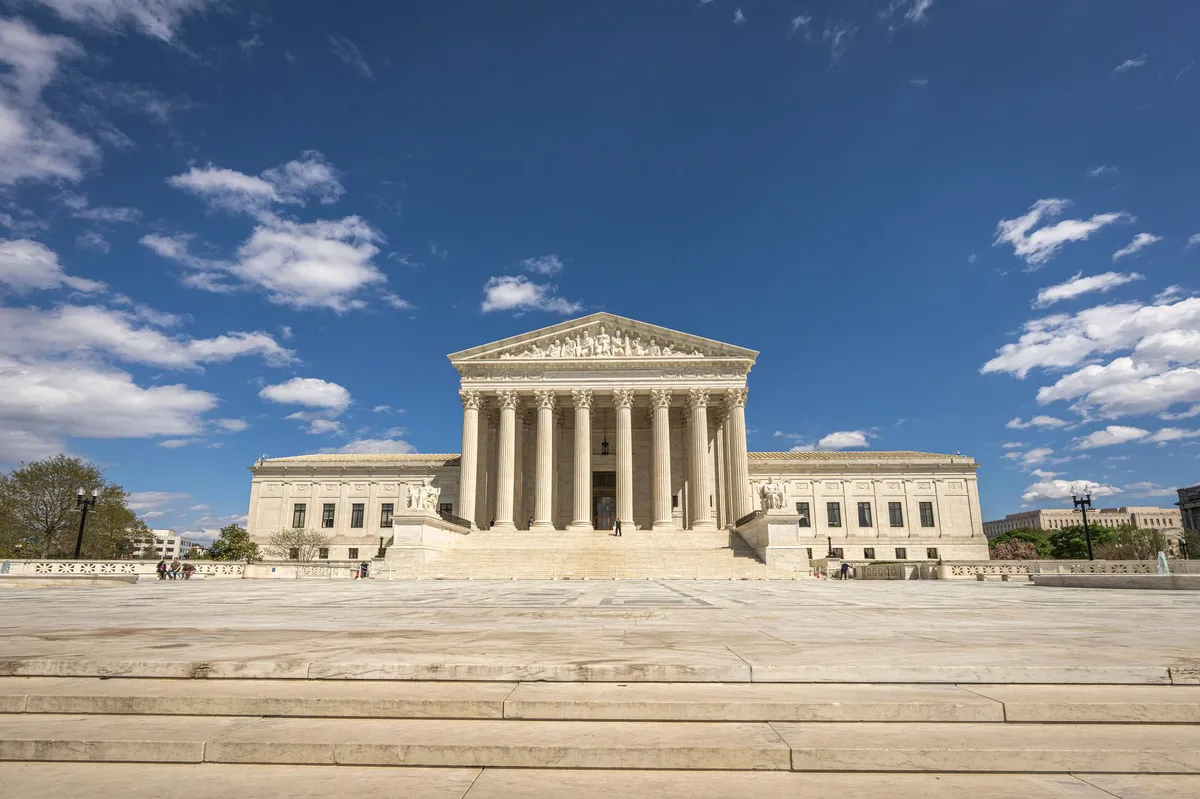
The ongoing discourse around court-packing and the composition of the Supreme Court raises significant concerns about the perception of judicial neutrality. With three justices appointed by Trump, the court has recently delivered rulings that have bolstered conservative positions on various contentious issues. Critics argue that the Republican push to freeze the court's composition is a strategy to entrench a conservative majority and inhibit future Democratic governance.
Ethical Concerns and Legislative Responses
The political scrutiny surrounding the court has intensified in recent months, particularly following revelations about ethical lapses by justices, such as Justice Clarence Thomas's failure to disclose gifts from conservative donors. In response, Democrats have introduced various legislative measures aimed at addressing perceived ethical deficiencies within the court. These measures, including proposals for expanding the court, have largely stalled amid fierce Republican opposition.
Key Takeaways
- The failed amendment to cap justices at nine highlights ongoing partisan tensions.
- Republicans accuse Democrats of attempting to pack the court and undermine its independence.
- Amending the Constitution is a complex process requiring broad bipartisan support.
- Ethical controversies surrounding justices have fueled calls for reform and greater accountability.

Frequently Asked Questions
What is court-packing, and why is it controversial?
Court-packing refers to the practice of increasing the number of justices on the Supreme Court to gain a political advantage by appointing judges who align with a particular ideology. The controversy arises from concerns that such actions could undermine the court's independence, transform it into a political tool, and erode public trust in the judiciary. Historically, attempts to change the number of justices have been viewed with skepticism, as they could lead to a cycle of retaliation between political parties.
How does the amendment process work in the U.S.?
The U.S. Constitution can be amended through two primary methods. The first requires a two-thirds majority vote in both the House of Representatives and the Senate. The second method involves a constitutional convention called by two-thirds of state legislatures. Once an amendment is proposed, it must then be ratified by three-fourths of the state legislatures or by conventions in three-fourths of the states. This process is intentionally challenging, reflecting the framers' desire for stability and continuity in the constitutional framework.
What are the implications of the current Supreme Court composition?
The current composition of the Supreme Court, with a conservative majority, has significant implications for various legal issues, including abortion rights, healthcare, and voting rights. Decisions made by the court can shape public policy and influence the direction of the law for decades. The perception of the court as a politically biased institution could lead to increased public skepticism and calls for reform, including potential changes to its structure or governance.
Comments
Macron's Landmark Visit to the UK: New Dynamics with PM Burnham
French President Emmanuel Macron's recent visit to the UK marks a significant moment in Franco-British relations under new Prime Minister Andy Burnham, featuring discussions on key bilateral issues.

Related articles






Popular in Business Law
- Supreme Court Justices' Financial Disclosures: A Closer Look
- Vishal Garg's Leadership Fallout: The Rise and Fall of Better.com
- Former Intelligence Official Faces Penalty for Post-Government Misconduct
- Blank Rome Faces Lawsuit After Major Data Breach Exposes Personal Information
- Congress Faces Reckoning Over Member-Staff Relationships